DO NOT BE AFRAID, TRUST IN GOD
HOMILY FOR NINETEENTH SUNDAY, YEAR A.
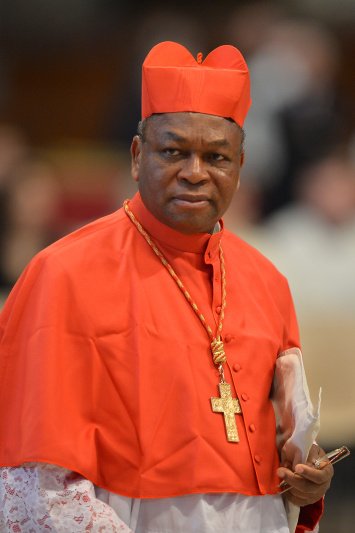
Many of us are living in fear. We are often more afraid of offending people than of offending God, probably because of what we stand to gain or lose. Recently, however, we witnessed what the fearlessness of a Christian should look like in the interview granted by Cardinal John Onaiyekan, Metropolitan Archbishop Emeritus of Abuja, following the visit of representatives of the Catholic Bishops’ Conference of Nigeria (CBCN). Speaking truth to authorities is necessary in a decaying society like ours. In the midst of these that Christ tells us, “Have no fear” (Mt. 14:27).
In the first reading, we read of the fear of Elijah, which made him to hide in the cave. In the antecedent to this pericope, “King Ahab and Jezebel expressed their intention to take the life of Elijah as they did to other prophets and Elijah became afraid and fled for his life” (1Kings 19:1-3). In verse 10, we hear the prophet saying, “…I am the only one left and now they want to kill me.” In fear, he ran to the mountain of God to seek refuge.
The journey of Elijah to Mount Horeb reflects our spiritual path. God’s voice is gentle and subtle, not always grand and powerful. Sometimes, life is tough, and we seek solace from God. We must pay attention to God’s quiet presence. He cares for us, even in dark times. The “still small voice” is how God speaks to us. It may not be loud, but it guides and comforts us whenever we face doubt and fear in our journey of faith. In view of this, the psalmist says, “I will hear what the Lord God speaks; he speaks of peace for his people and his faithful” (Psalm 85:8). Similarly, we read in the gospel how Christ restored peace to the hearts of Peter and the other disciples while they were in fear.
The gospel presents to us Christ’s manifestation to his disciples whose boat was being tossed by the storm, as he came to them, walking on the sea (Mt 14:25). In Biblical literature, the sea is often represented as the abode of demonic forces hostile to God. Having this in mind, fear gripped the disciples when their boat was beaten by the waves; for the wind was against them. “When the disciples saw Christ walking on the sea, they were terrified, saying, ‘It is a ghost!’ and they cried out for fear” (v.26). At this point, we hear the voice of Christ saying, “Take heart, it is I; have no fear” (v.27).
When this initial fear was conquered, Peter was able to act like his Master; he got out of the boat and was walking on the sea towards Christ. But when he saw the wind, he was afraid and began to sink. He demonstrates a moment of strong faith, but his subsequent doubt highlights the challenge of maintaining faith in moments of difficult circumstances. While Peter was sinking, he realized he could do nothing without Christ, and so he cried out, “Lord, save me” (v. 30). Importantly, Peter’s fear and cry for help, helps us to reflect on how often we walk or attempt to walk without Christ.
As in the first reading, when fear of Ahab and Jezebel gripped Elijah, he ran to the mountain of God, where he could be saved, and while fear gripped Peter, he cried out for Christ to save him. For us, to whom do we run to when we are engulfed in fears? Have we ever been in a stormy or challenging situation? Where do we anchor our boats when strong wind hits us hard? It is in such moments that Christ reassures us of His presence.
P. Ken Dogbo, OSJ
What's Your Reaction?